Pritchard Collection Helps Decode Ancient Turtle Diets
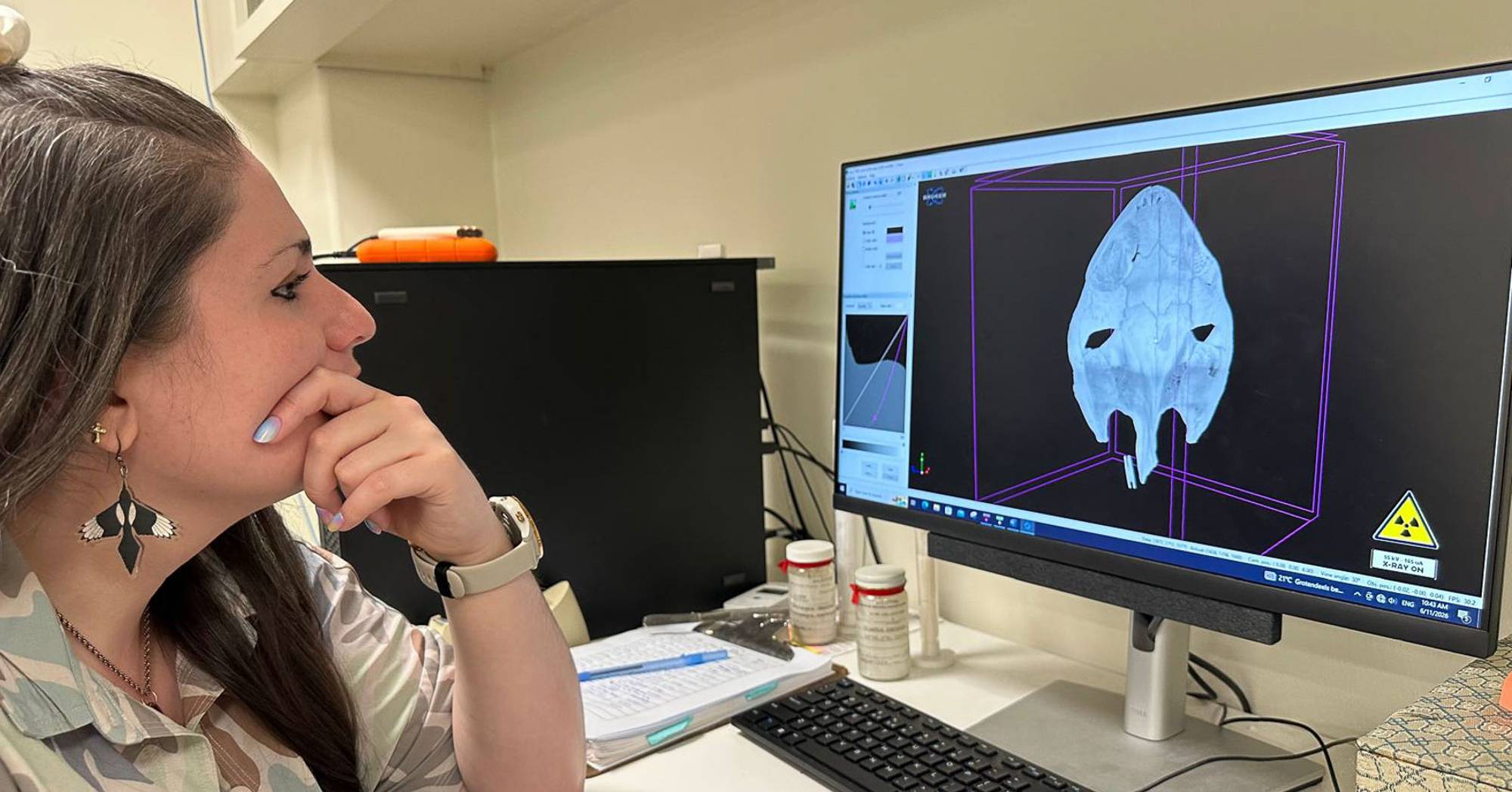
University of Washington Ph.D. student Brenlee Shipps reviews a 3D CT reconstruction of a turtle skull from the Pritchard Collection.
This June, the Turtle Conservancy welcomed University of Washington Ph.D. student Brenlee Shipps to the Chelonian Research Collection, where she studied specimens from the late Dr. Peter Pritchard's world-renowned collection. One of the largest and most comprehensive turtle and tortoise collections in the world, the Pritchard Collection continues to serve as an invaluable resource for scientists investigating turtle evolution, anatomy, and conservation.
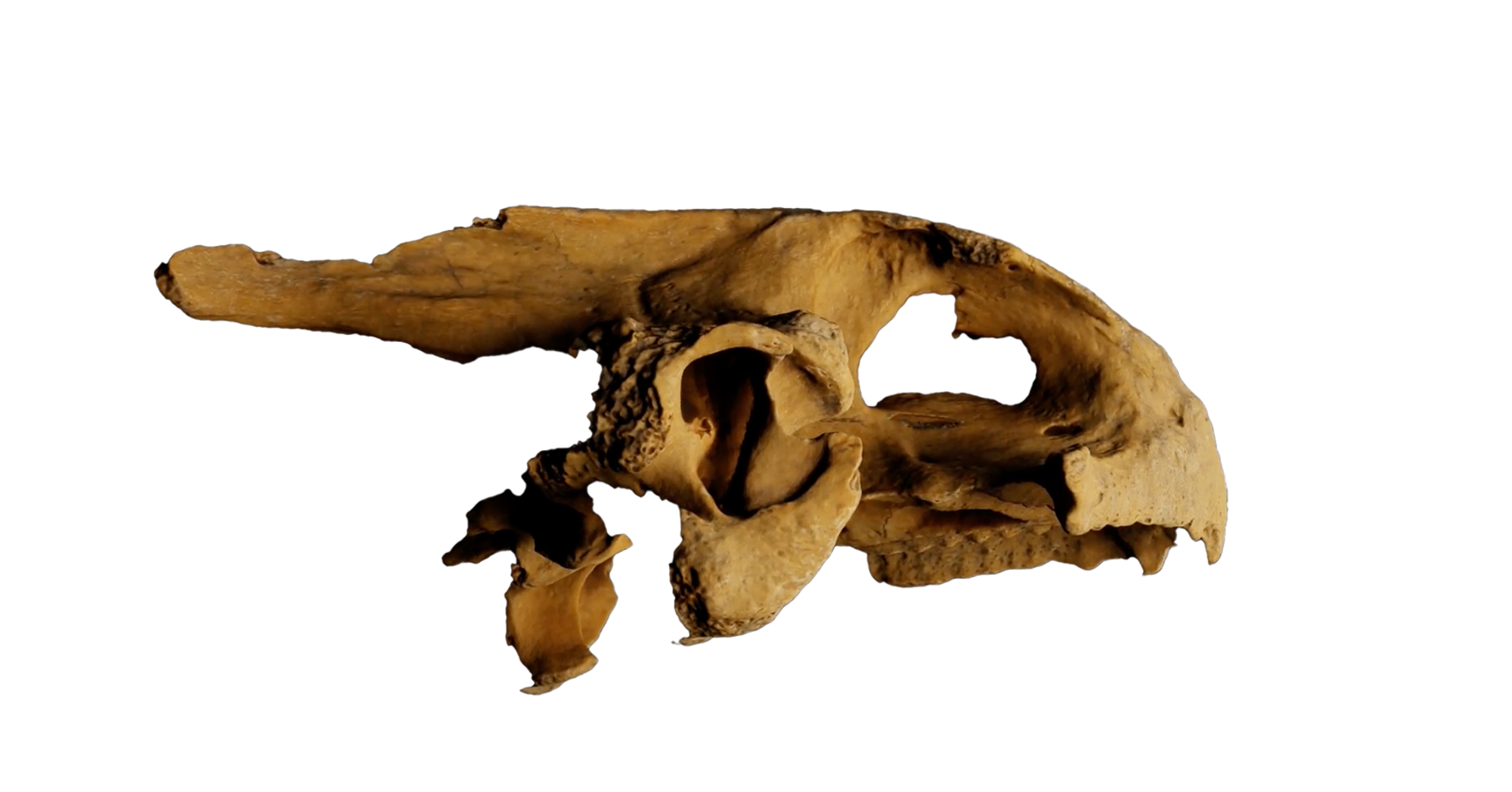
For Brenlee's research, select skulls were transported to the Natural History Museum of Los Angeles County for high-resolution CT scanning. These scans capture the intricate internal structure of each skull, producing detailed three-dimensional digital models without damaging the specimens. Once processing is complete, the models will be made freely available on MorphoSource, expanding access for researchers around the world.
By comparing the complexity of turtle beaks with the diets of living species, Brenlee hopes to build a framework that can be applied to extinct turtles preserved in the fossil record. Because keratin beaks rarely fossilize, understanding the relationship between skull shape and feeding ecology could provide an entirely new way to reconstruct the diets of long-extinct species.
From the Researcher
By Brenlee Shipps, Ph.D. Student, University of Washington
Despite the obvious usefulness of teeth, the fossil record is full of animals that instead opted for a hard beak made of keratin. This leaves paleontologists studying these animals with a problem: without teeth, how can we find out what role an extinct animal played in its ecosystem?
Turtles are the key to answering this question. Though there are only about 350 living species, turtles have a global range, a fossil record of over 210 million years, and a variety of diets and feeding strategies. As part of my PhD at the University of Washington, I use CT scans of turtle skulls to analyze whether a pattern exists between the complexity of a turtle’s beak and the reported diet of that turtle species.
In early June, I had the honor of bringing rare turtle specimens from the late Dr. Peter Pritchard’s world-renowned collection at the Turtle Conservancy to the Natural History Museum of Los Angeles County for CT scanning. Though the post-processing of these scans will take more time, once the models are complete they will be shared on MorphoSource for other researchers to use. Dr. Pritchard’s collection reflects his lifelong commitment to turtle conservation and biodiversity, and I sincerely wish I could thank him in-person for curating such an unrivalled resource. My study shows promising results so far, with carnivorous turtles showing less complex beaks than herbivorous turtles. As I improve my sample size, I anticipate seeing both sharpened results and additional nuance.
The Turtle Conservancy is proud to support researchers whose work advances our understanding of turtle evolution while extending the scientific legacy of Dr. Peter Pritchard. Every specimen in the Chelonian Research Collection represents another opportunity for discovery, ensuring this extraordinary resource continues to benefit turtle science for generations to come.
Interested in Brenlee's research? Visit her University of Washington researcher profile to learn more about her work and get in touch: https://biology.washington.edu/people/brenlee-shipps
