Reflections on Monsters of God
The Story Behind Monsters of God
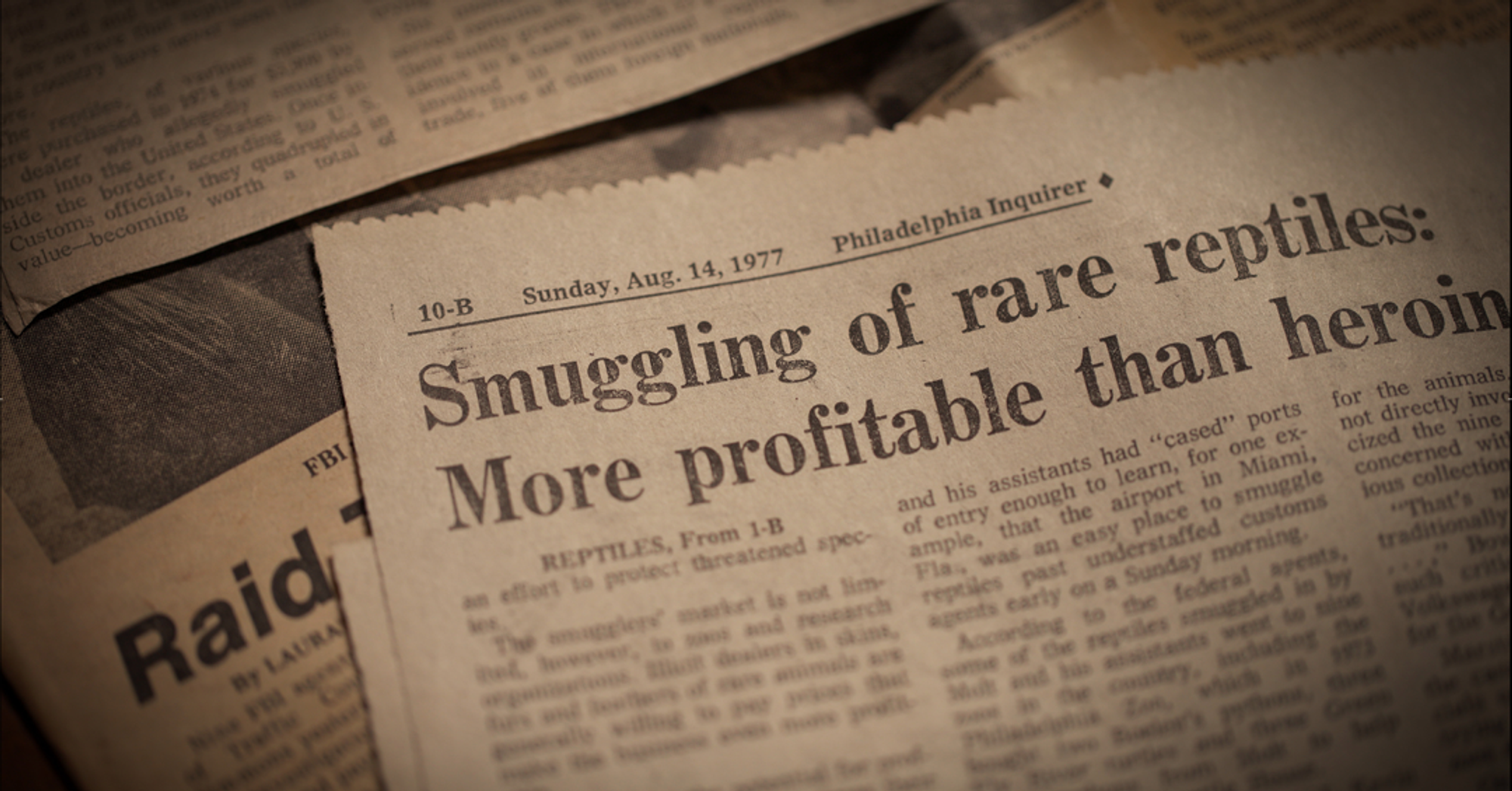
Decades before Monsters of God hit the screen, this 1977 Philadelphia Inquirer headline was already telling the story — reptile smuggling outpacing heroin in profitability. Read our review of the series below.
I've never anticipated a series the way I anticipated Monsters of God. As someone with a lifelong fascination with reptiles and amphibians, I was hungry to learn the backstory behind this corner of the wildlife trade. The series opens where it should: with Hank Molt and his Philadelphia Reptile Exchange, running the "Wild West" era of the trade wide open — dealing to collectors, zoos, even Hollywood — before Molt's rivalry with dealer Tommy Crutchfield curdles into the feud that drives the whole series forward. Watching that rise, it's obvious smuggling has shaped the animals on offer everywhere from the local pet store to the most reputable zoological gardens, and hardly anyone realizes it.
Smuggling is just one of the many threats reptiles and amphibians face in the wild, but these scofflaws let greed and obsession override any concern for the animals' decline. Unsettlingly endearing as some of the smugglers are, jail time barely slowed them down. They kept outwitting federal officials with real ingenuity — one episode features smugglers busted mid-heist by a federal agent hidden inside a gorilla costume, which tells you everything about how absurd this mongoose-and-cobra game got — until backstabbing and sloppiness finally handed law enforcement the edge. By the time Operation Chameleon closes in on Malaysian kingpin Anson Wong, with an agent working undercover inside his own network, the mongoose has well and truly turned on the cobra. Monsters of God pulls back the curtain on one slice of a multi-billion-dollar trafficking industry — a black market fueled by pure, insatiable greed.
And the cinematography earns every bit of that story. The reptiles and amphibians are shot with real accuracy and real care, capturing just how beautiful, diverse, and strange these creatures are.
A community braced for the worst
Long before the premiere, the announcement set off a wave of anxiety in the reptile-keeping community. A quiet boycott took hold — the hope being that starving the series of attention would let it fade away. The fear: that it would paint every reptile keeper with the same reckless brush, while the responsible majority took the hit. It's not an unreasonable fear. In the age of social media, someone free-handling venomous snakes or doing something ill-advised with a crocodilian racks up far more views than someone using proper tools and technique — and the fallout from a few viral stunts tends to land on everyone, in the form of bans, restrictions, and permitting nightmares for keepers doing everything right.
But here's the thing: while the series doesn't shy away from people taking real risks with venomous animals, that's nowhere near its focus. Even Crutchfield's own arc undercuts the fear — he re-emerges from prison not into more smuggling, but into the legal, high-end world of morph breeding, chasing genetically distinct animals that fetch enormous prices on their own merits. Over the last 40 years I've watched captive breeding programs and animal husbandry standards leap forward in exactly that direction, driven by genuinely knowledgeable, genuinely passionate professionals and hobbyists — and I expect that trajectory to continue. My guess is plenty of people who swore off watching quietly tuned in anyway, and found their worst assumptions didn't hold up.
The Ninja Turtle problem — mostly dodged
Anthropomorphized animal media has a track record of triggering impulse-buy spikes in whatever species just got its close-up — turtle sales notoriously surged after every Ninja Turtles release. The trouble comes later, once people realize a turtle is a multi-decade commitment, and the animals get dumped into local waterways. Non-native releases like these are a real threat to native wildlife, and they overwhelm rescues that are already stretched thin, which only fuels more releases down the line. The good news: Monsters of God is squarely aimed at adults, so a copycat surge in impulse reptile purchases seems unlikely.
A note on the ending
The finale lands on a mixed note — a well-meaning but ethically murky "retirement gift" that, frankly, would have done more good folded back into the ploughshare tortoise breeding program the series spotlights. It's a strange choice for a show that spends five episodes making the case that reptiles are worth more than what they can be sold, traded, or gifted for.
Still, Monsters of God earns its place: reptiles, drugs, outlaws, and the officials who finally caught up with them — few true-crime stories are this strange, or this well told.
— Ken Gilliland, PhD, Herpetologist
